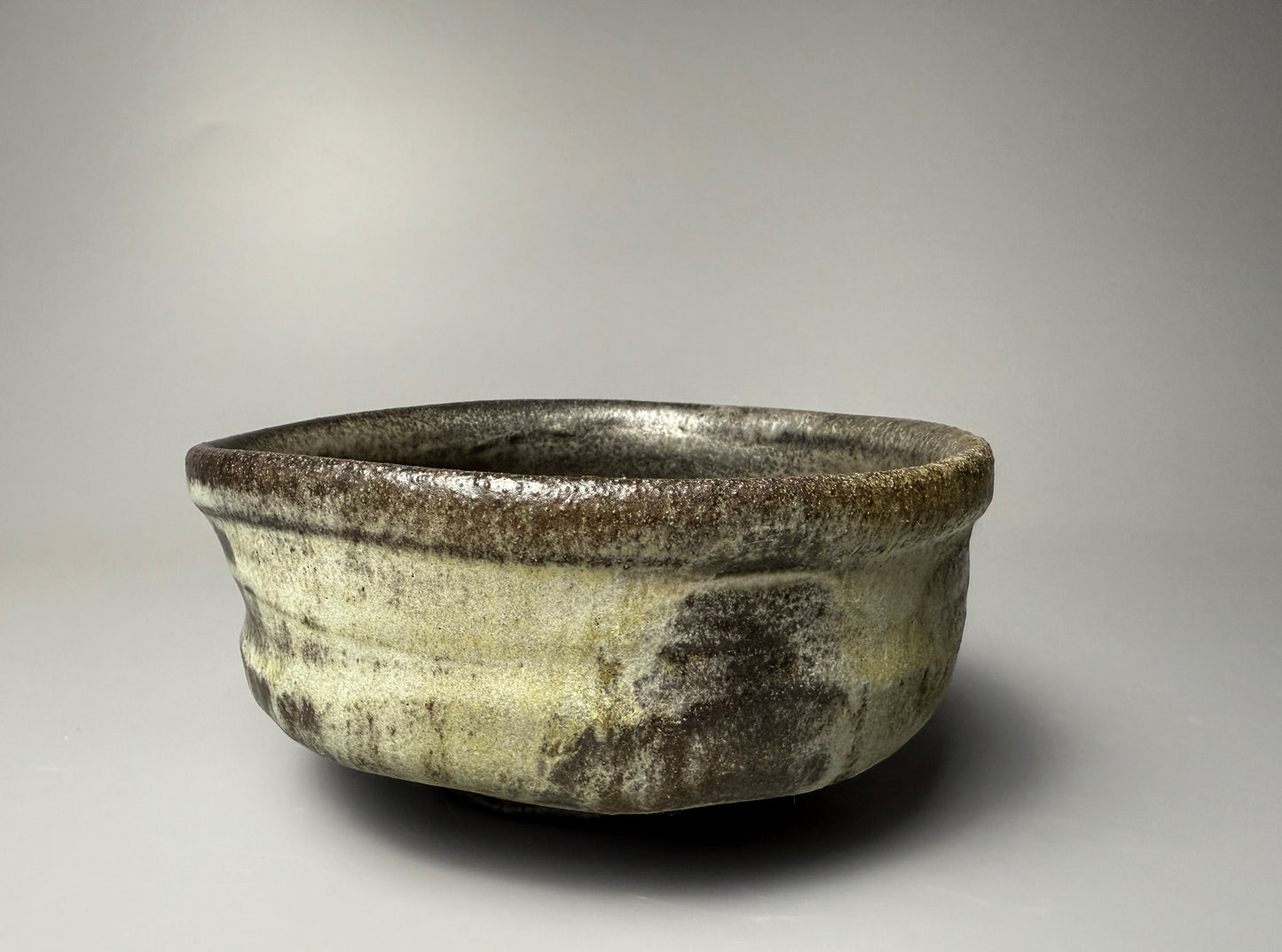
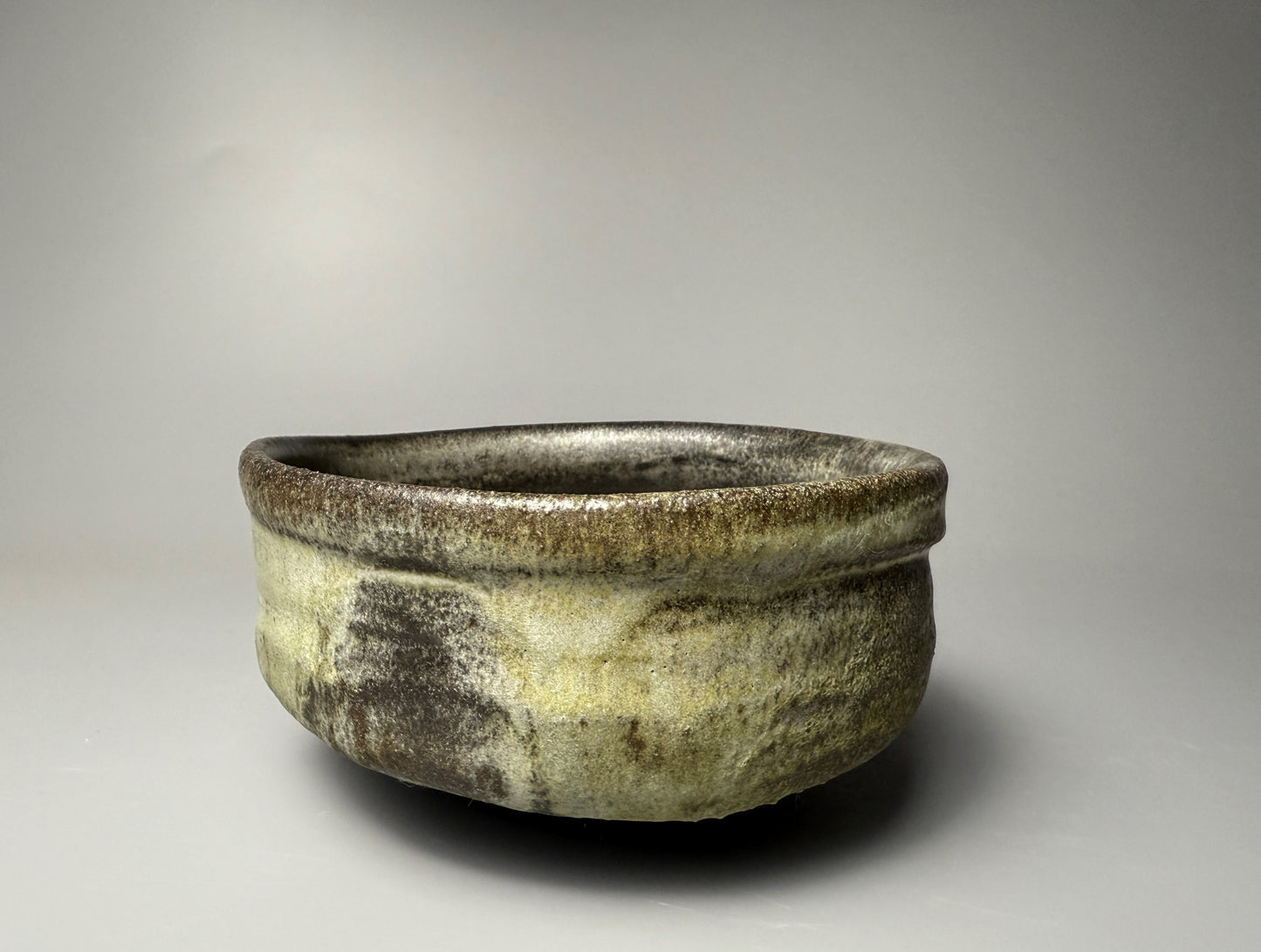
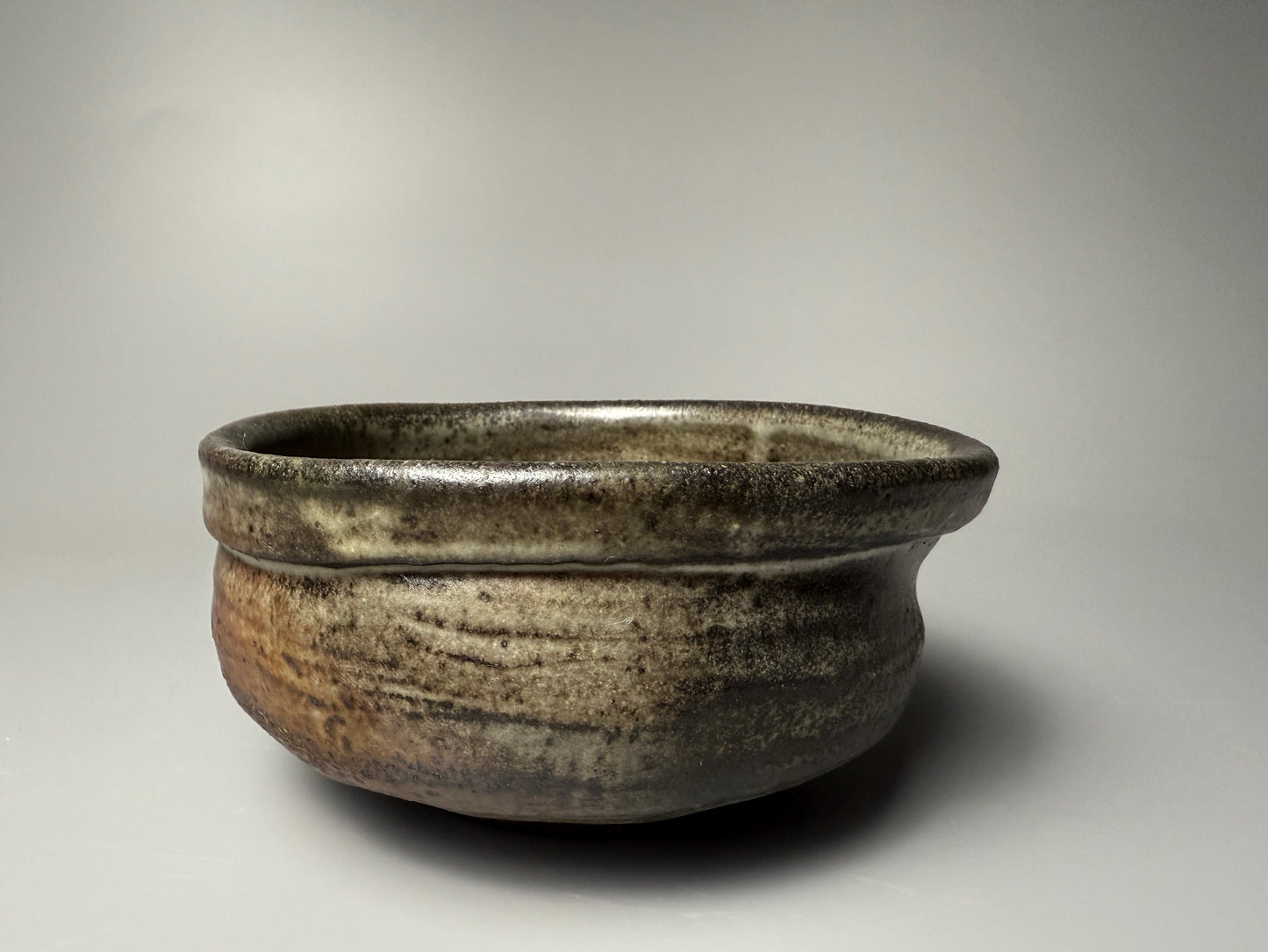
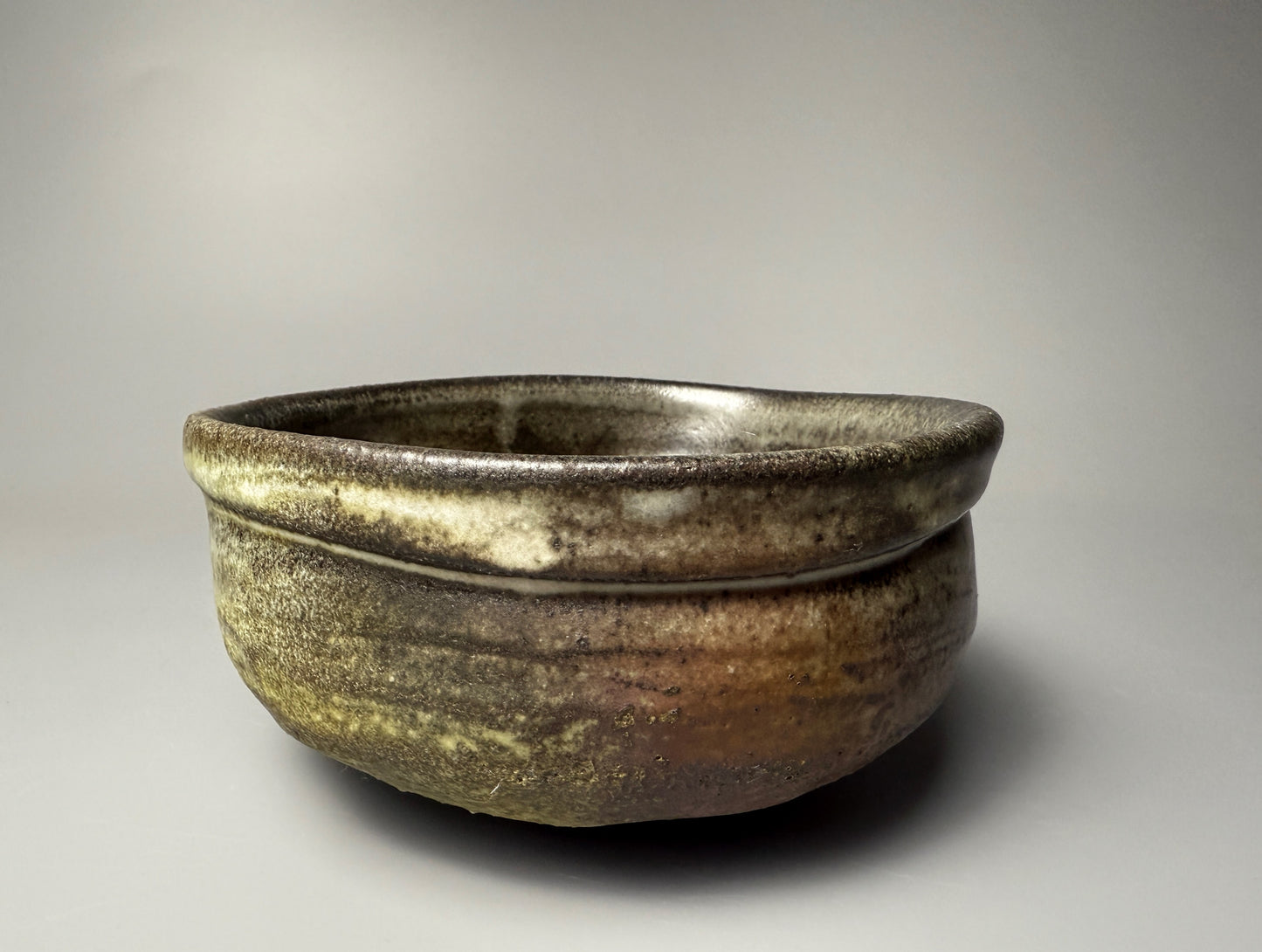
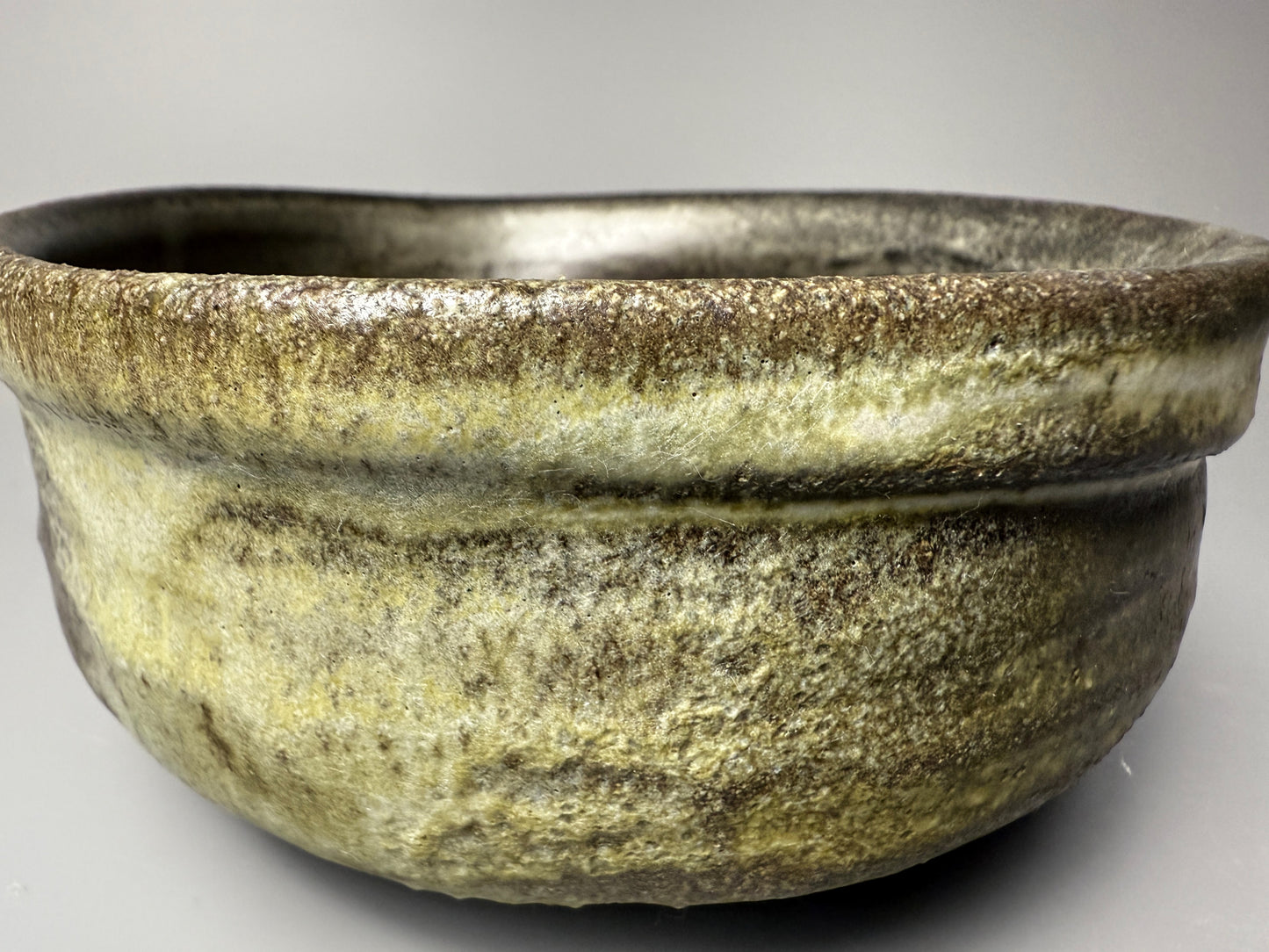
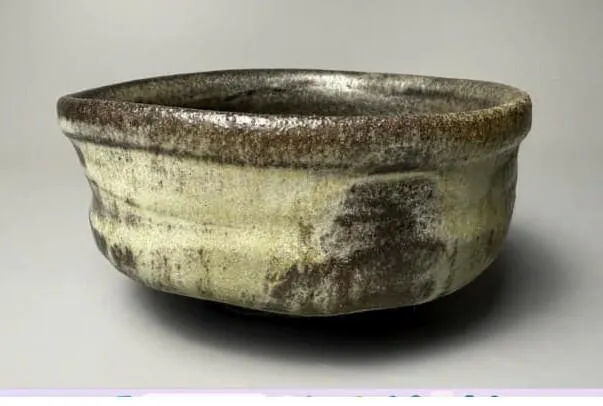
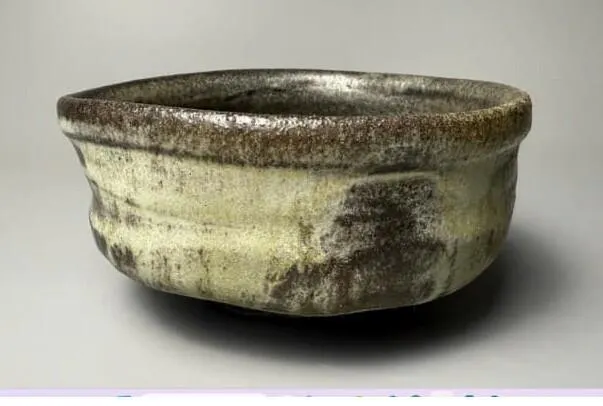
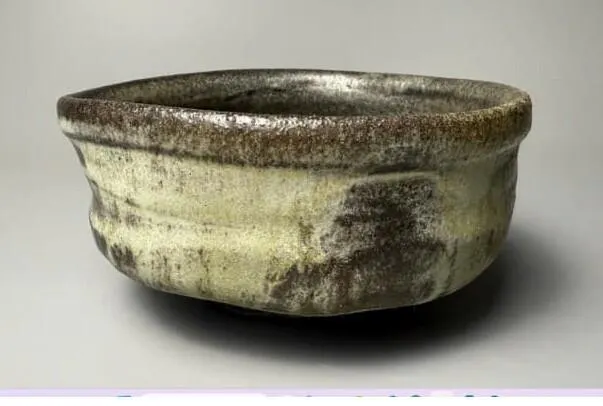
A wide, low cup with vertical walls, suggesting the Badarai type. With certain liberties in this case. It presents a very broad lip band and very pronounced waist, so that the whole body seems to be composed of shoulder, waist and lip, as the figure of some leprechaun. Even the greenish colour would match the concept of a moss-grown spirit from the woods, But 'Badarai' refers to a trough for horses, not really a contemptuous naming in a society of Samurai, when the horse has held an elevated position. So why should a Samurai not drink from the same vessel as his horse? Not at the same time, though.
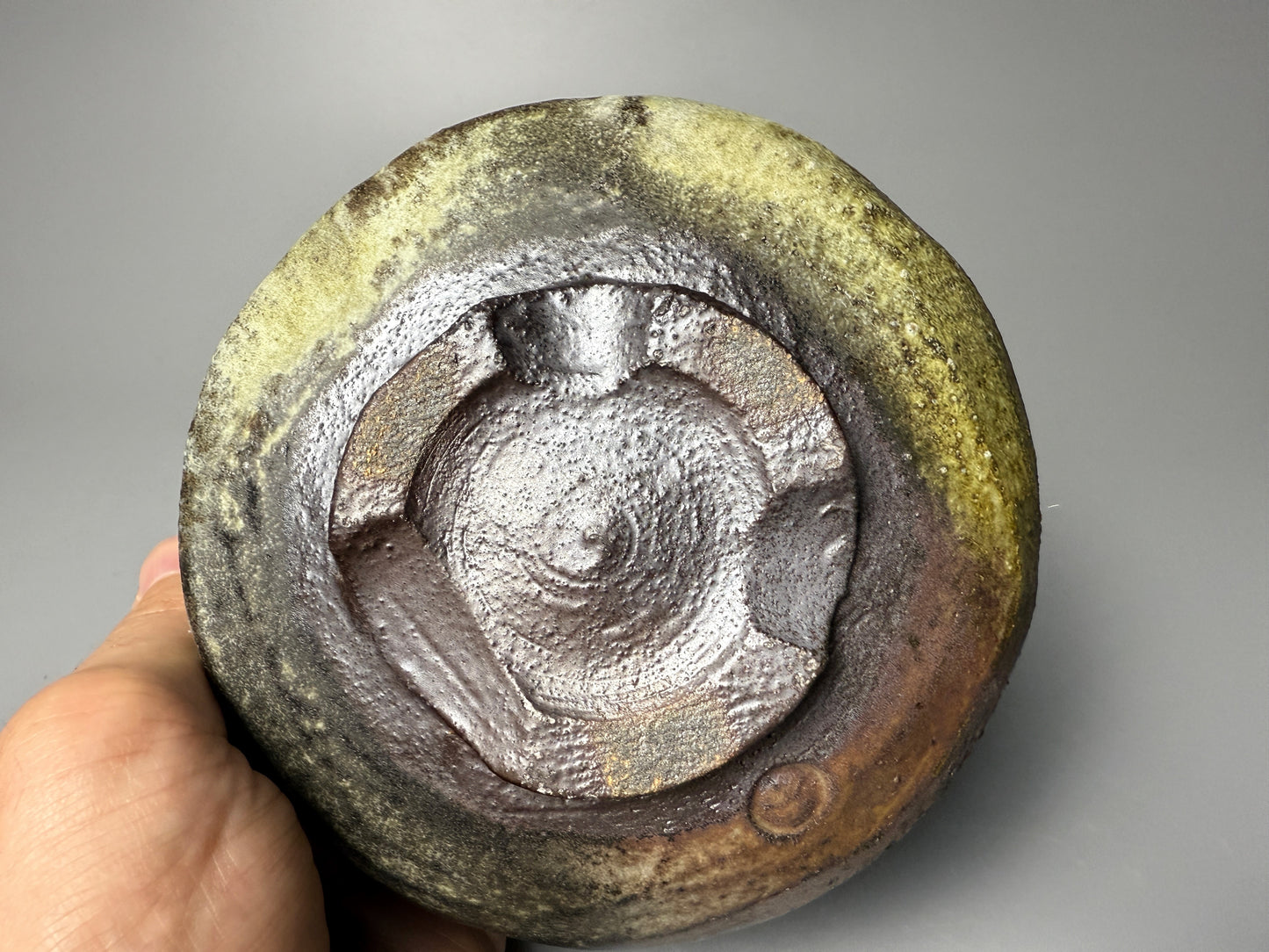
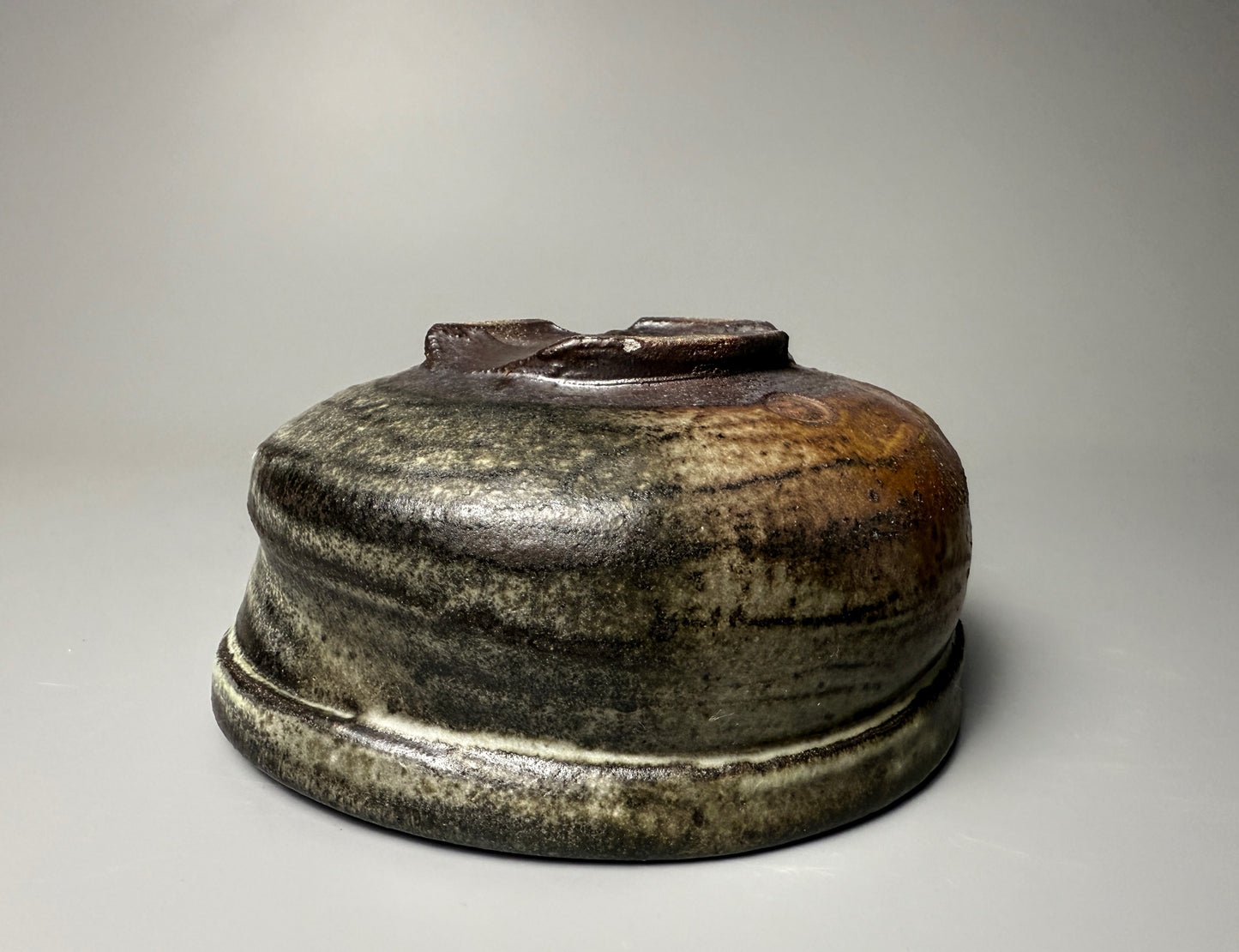
The bowl has a remarkable foot ring. It is divided in three parts by unequal scores, neatly notched with a blade. The centre is taken by a thorn, emerging from a delicate Kaijiri. Emarginated at the base it sets off clearly from the ample shoulder, which is faceted by generous strokes. Adjoining in the upward direction follows a bulge, more an appendix to the shoulder than a fragmentary wall, instantly tightening into the groove of the waist. The prominent lip is a little wonder in itself. Jutting out in one direction, it runs a tripartite, dynamic curve or better curves, which culminate in the allusion of a beak. You could understand the lip as a ring, that grows seamlessly out of the inner wall, running around in a fluently changing bevel, while outside it is sharply set off from the body along a clearly notched line, which spans a shifting breadth.
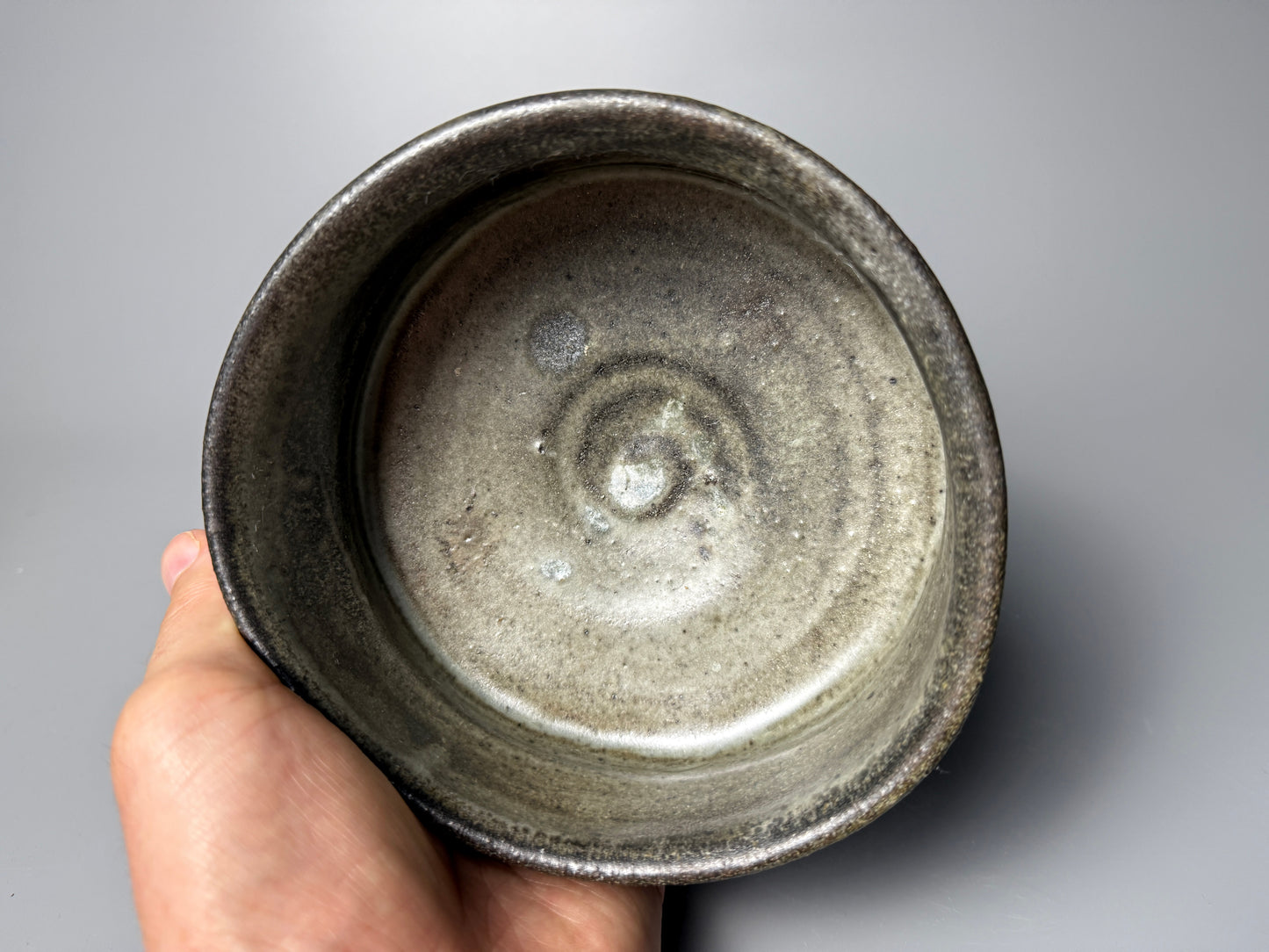
I have no idea, what kind of glaze has been applied, but it interacts splendidly with the ash flow. It results dark green, while the ash provides lighter mint tones. Unimaginable ways of distribution have produced streaks, curtains and veils, on one side an aerea like a brownish cheek extends over the glaze from the lip to the fringe on the shoulder. A more sparing application of glaze will have done the effect. The wall inside is manifoldly curved, with an extremely elegant turn towards the 'beak' of the lip. Finally the bottom is structured by a wider Kaijiri, leading into a flat Chadamari and surrounded as enlarged by a cavetto. This gimmick works as a subtle way to widen the impression of the top view and to facilitate whisking the tea powder.