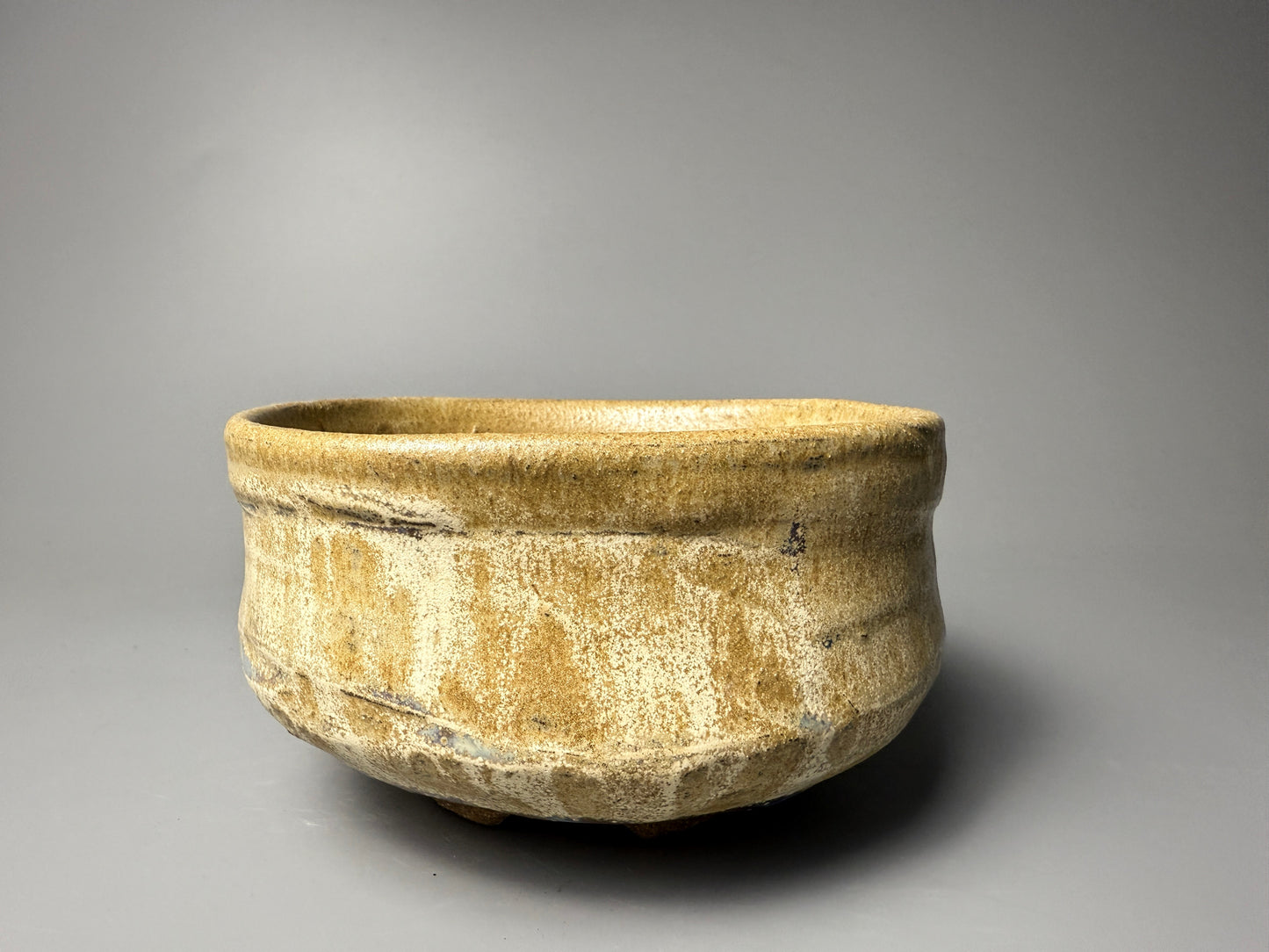
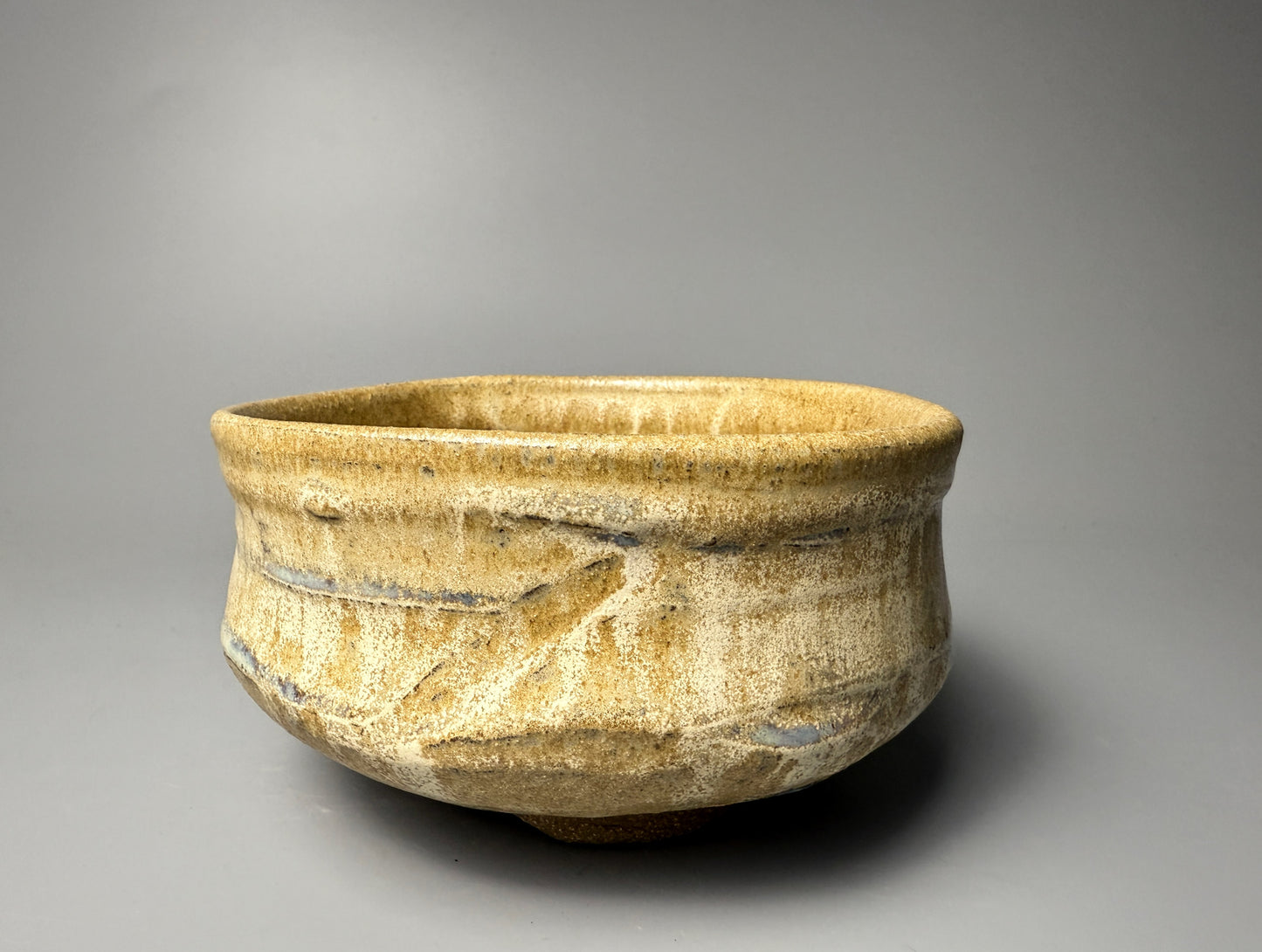
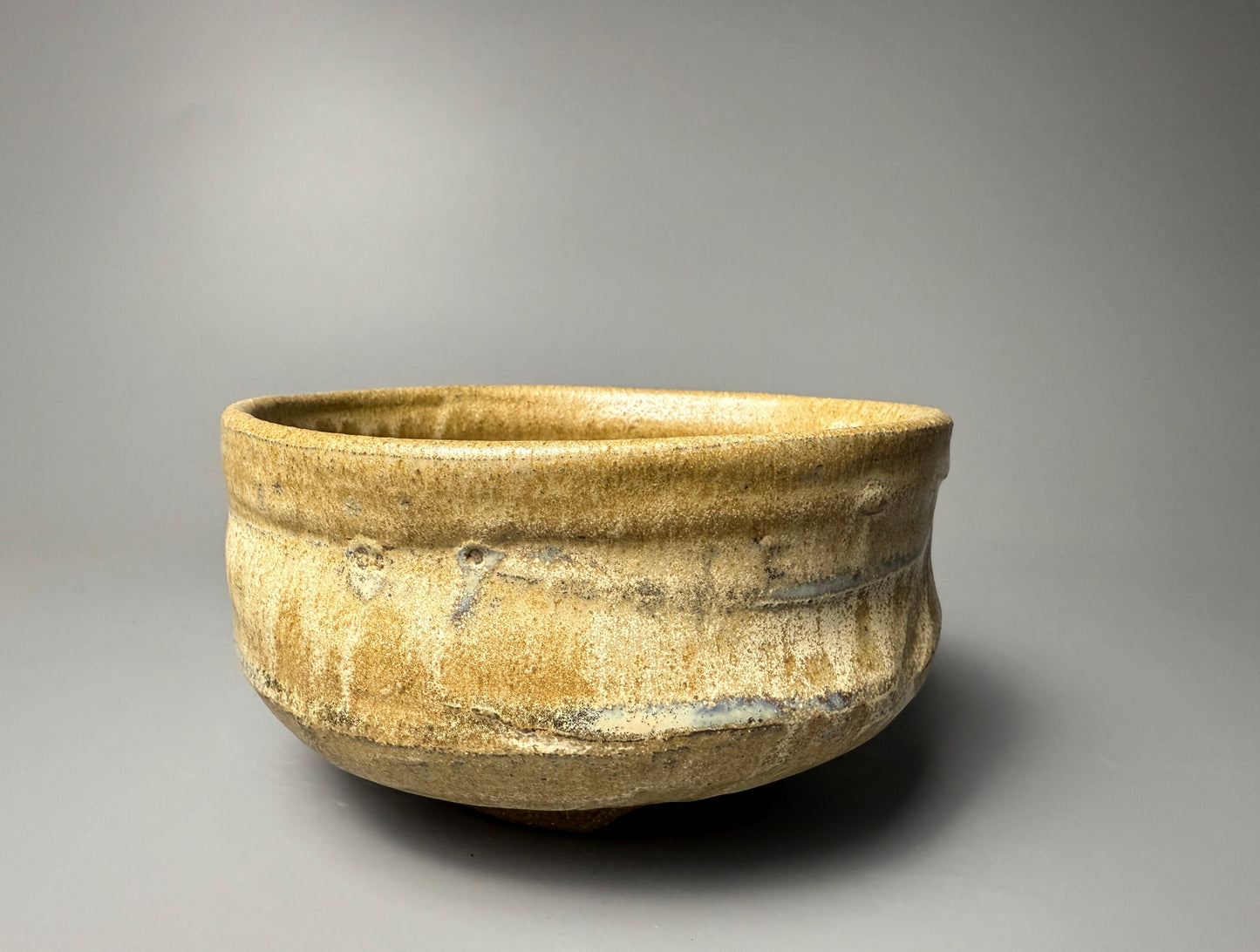
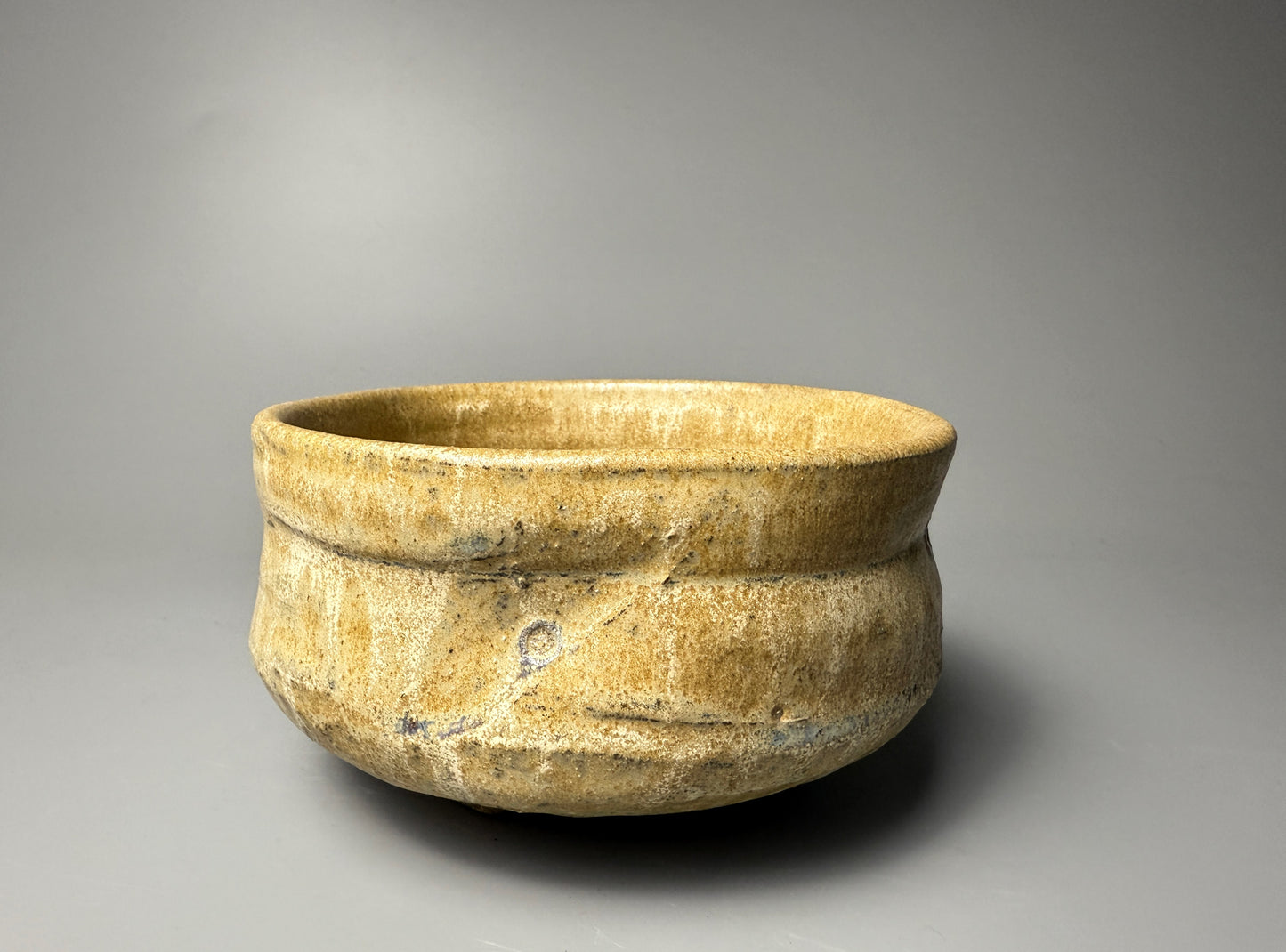
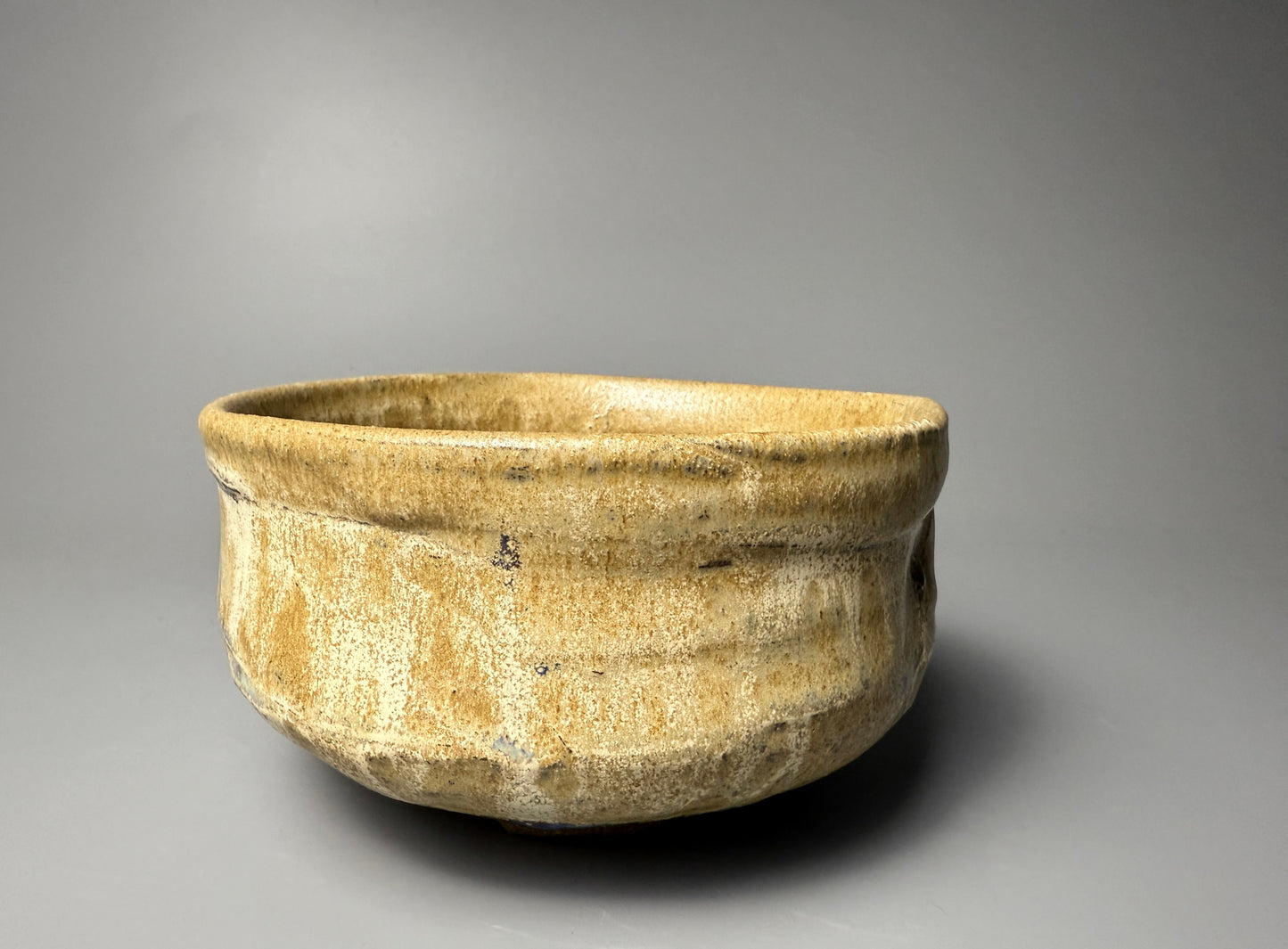
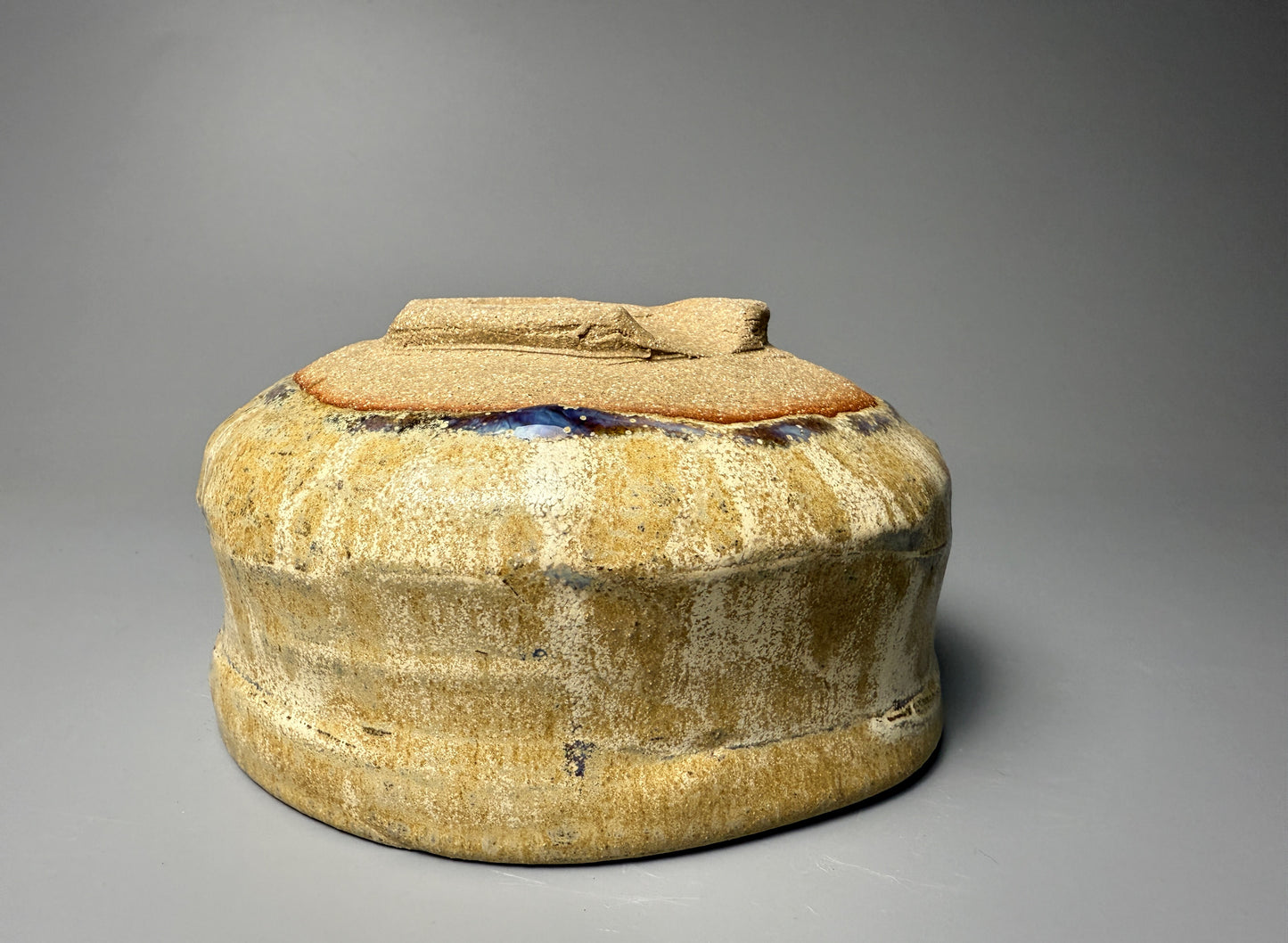
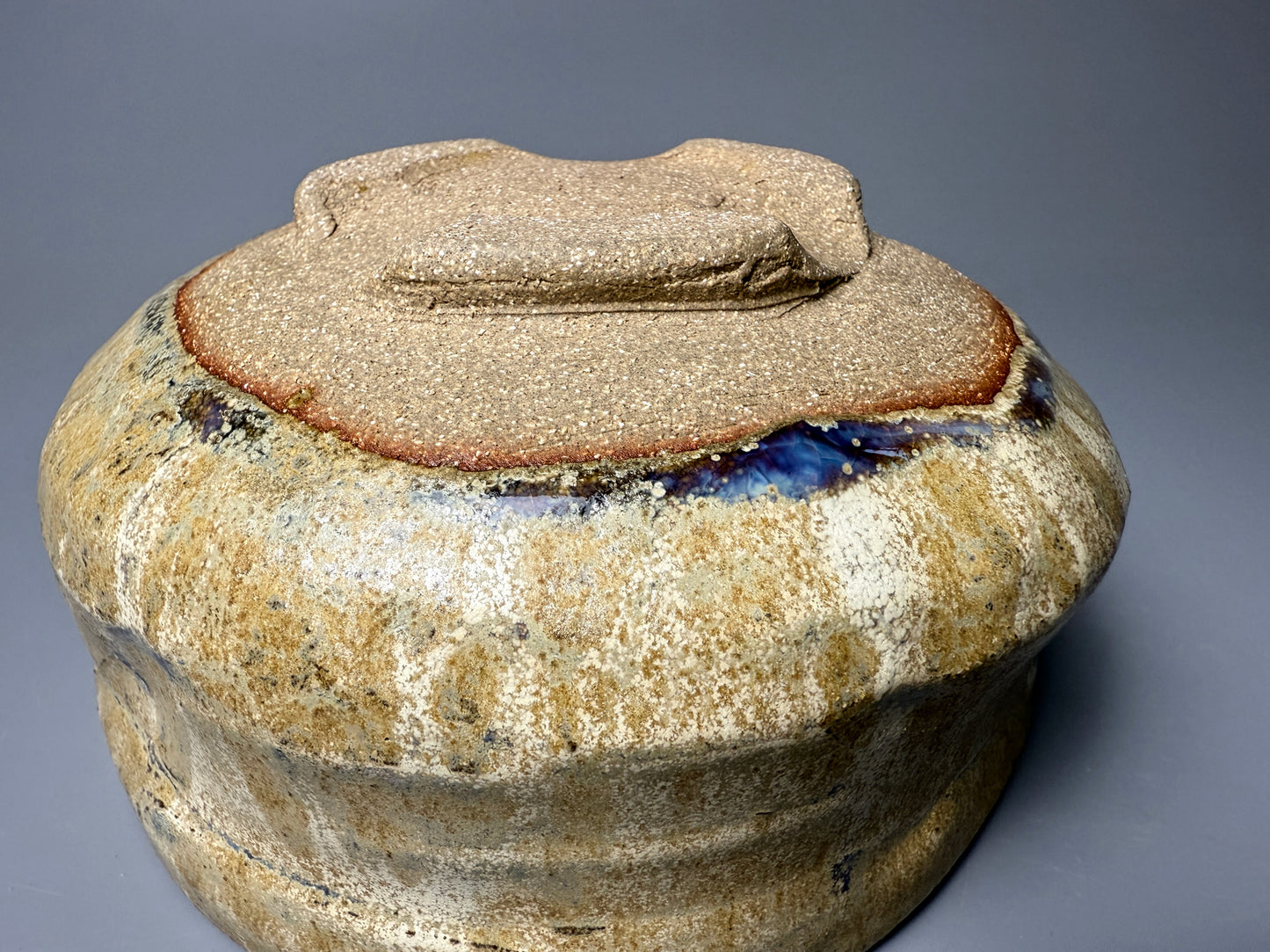
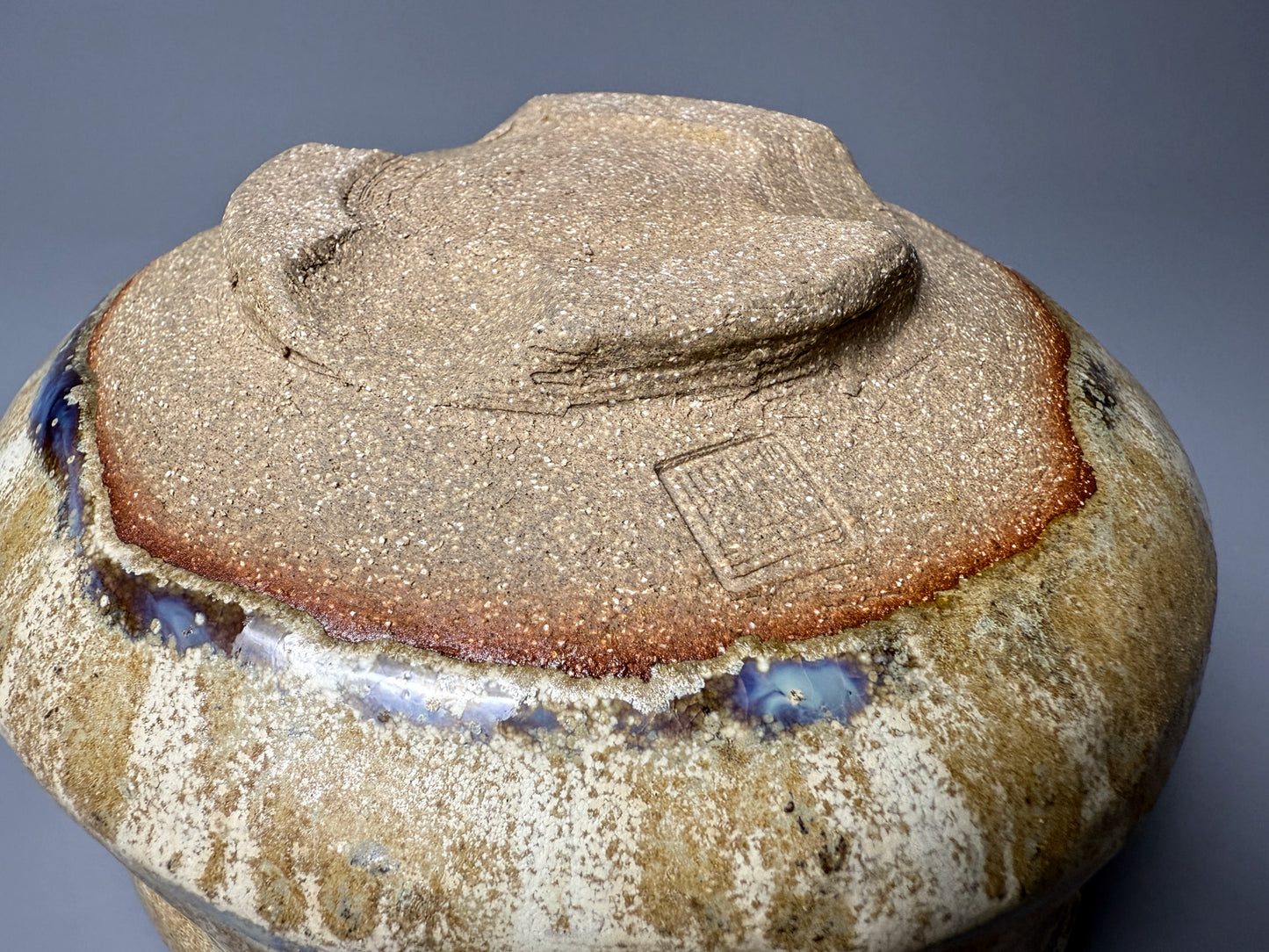
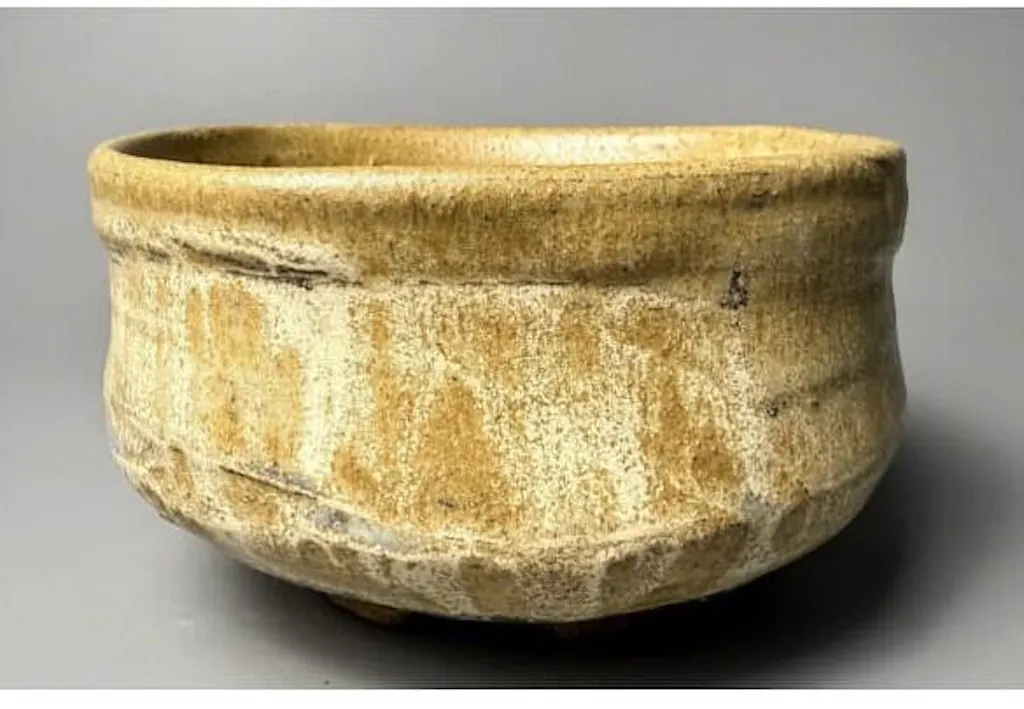
This is a large, stocky bowl with a solid, centred stance, which is not the result of bland symmetry. Impressivly it is the outcome of conflicting forces, that forged its character by propulsion, pressure, cutting and even blows. The tripartite, grooved foot ring gives the impression of legs akimbo, as if ready to withstand sudden gusts, the prominent, carved edge of the shoulder reminds of a defiantly thrust out, square-jawed chin.
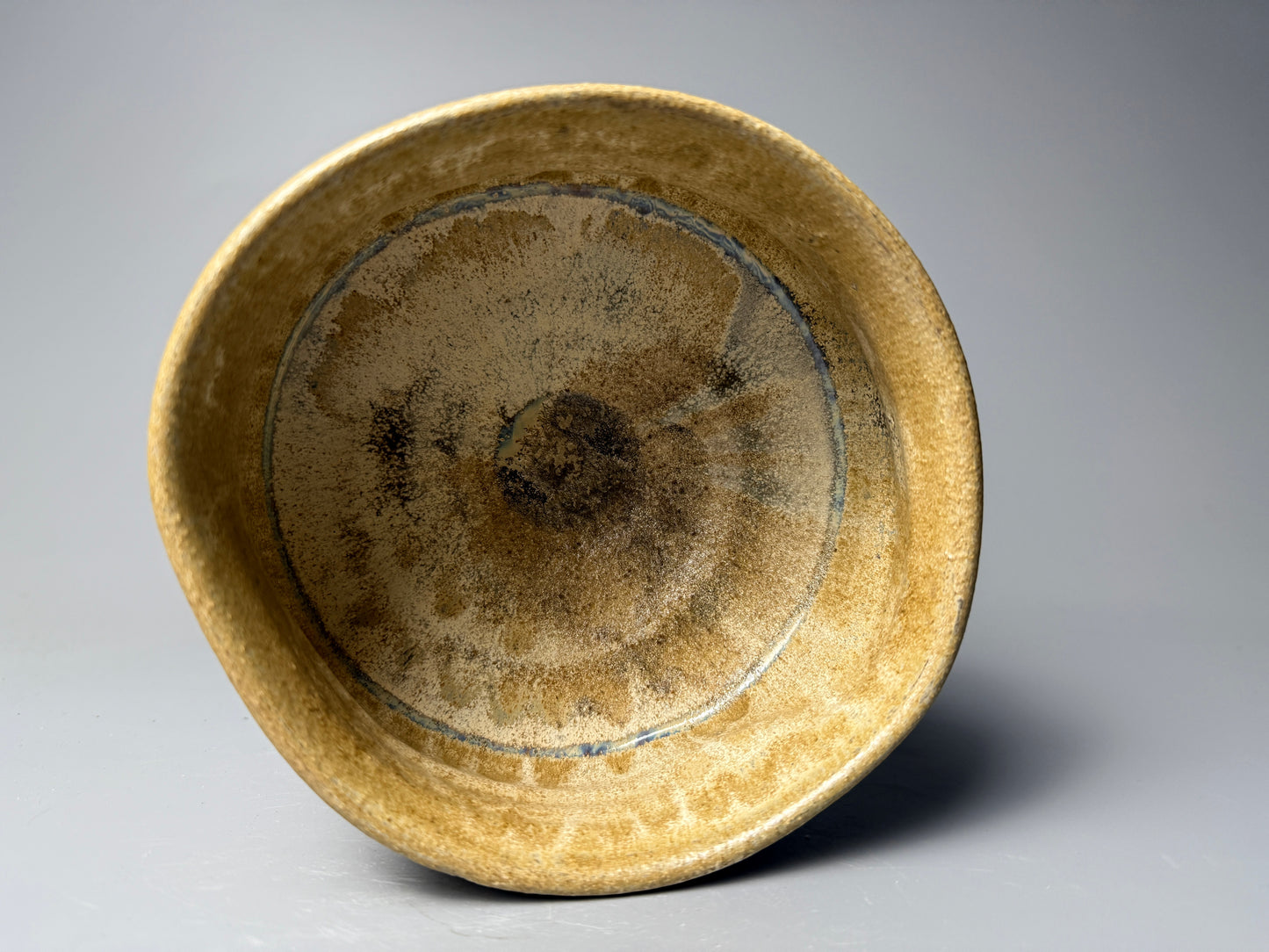
Between the shoulder and the cautiously crimped rim, a broad, heavily structured furrow brusquely embraces all of the wall. Sharp wheel-marks of a spatula, partly blurred by daubing, casually run along the circumference and define a smooth lip-band as a calm contrast to the rough protrusion of the shoulder's rim. In three places of the wall oblique marks of strikes are noticeable, supposedly done with a resilient ledger, which had an impact on the course of the wall and most obviously of the lip. The wall inside does not partake in the agitation. It falls in smooth furrows down into the Chasen aerea, where a clearly drawn nook designs the boundary of a conically sloping bottom (you may call it a funnel), that ends in a flat, coin-sized Chadamari.
The glazing will raise a brow or another. It is basically of a light, grainy ochre and of a subtleness, which only slightly smoothes the traits of the formed body. Though, a second application, presumably by brush, of a thinner solution, results in a structure of lighter, vertically flowing reams, which counter and dominate the wheel marks. One might speak of a structure like a torn curtain. Yet there is another conspicuous component in the coating. Some blueish glaze of more viscosity and body has happened to mingle with the straw ash. It has set in creases as in the sharp nook around the bottom and did accumulate at rims and edges, where it seems to emerge from under the ash cover, driven by its greater mass. Not only does it set a stark contrast of colours but also augments the plasticity of the carved lines.